Author: Souni

  • Jybbo: Because Life Happens Between Therapy Sessions

    Jybbo: Because Life Happens Between Therapy Sessions

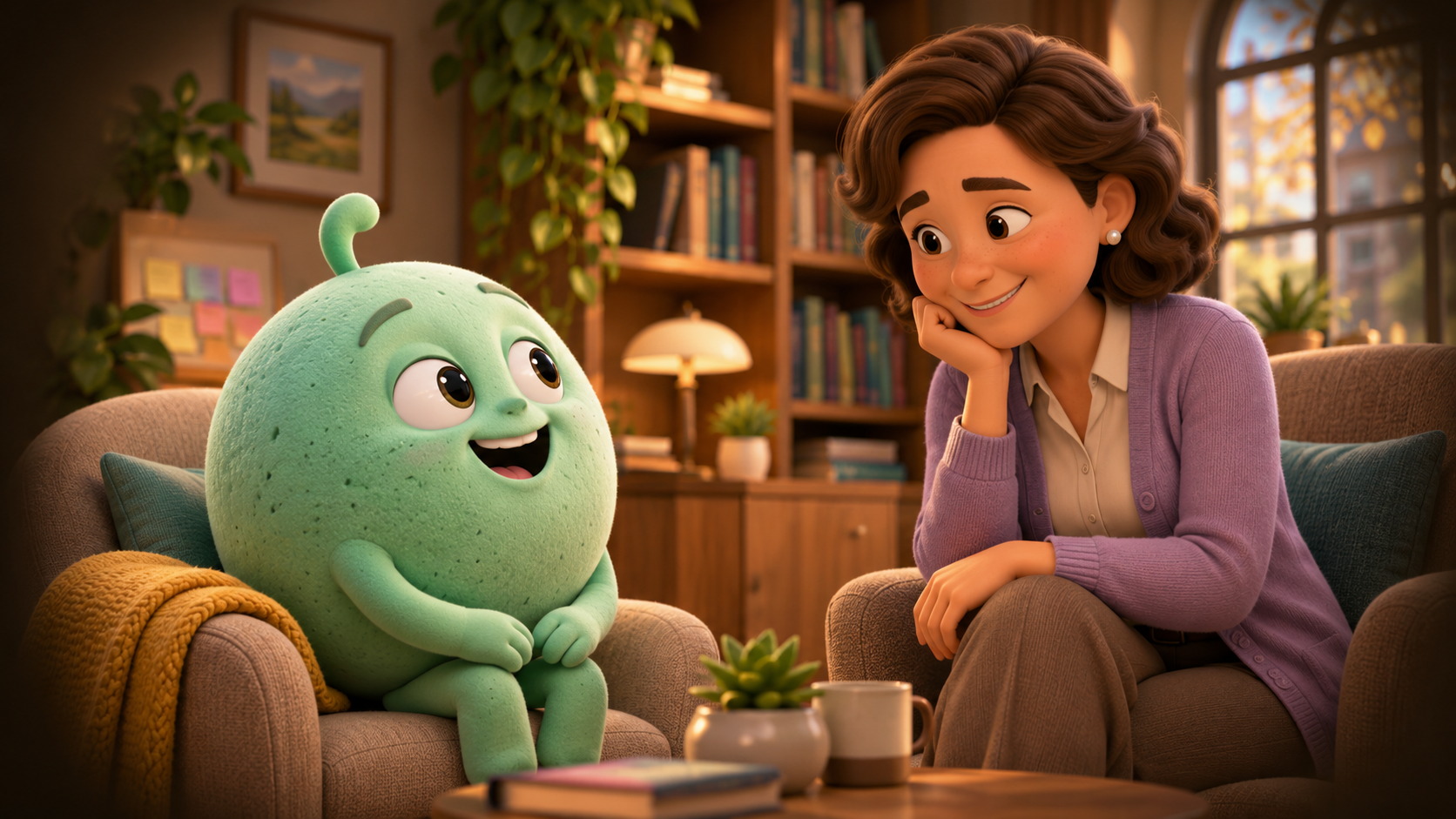
    A green plushie speaking to his therapist.

    An animated introduction to a different kind of mental-health companion for young people.

    Read more

    Imagine you’re 14. You’re having a difficult time, but you’re getting help. You see your therapist once a week, and together you’re making progress.

    Then Tuesday happens.

    There’s an awkward moment at school. An argument with a friend. A thought you can’t quite shake. You remember talking about something like this in therapy, but what were you supposed to do again?

    That’s the gap Jybbo is designed to bridge.

    Meet Jybbo, the digital companion designed to help young people put therapy into practice between sessions. Discover how it brings young people, parents and clinicians together.

    A little support, right when it matters

    Jybbo is a digital companion that helps young people put what they learn in therapy into practice in everyday life.

    Through an engaging app, young people can explore psycho-education, practise coping strategies, reflect on their experiences, take on manageable challenges and use tools selected by their therapist.

    And because talking about feelings isn’t always easy, Jybbo also explores how AI can make support feel more approachable — within clear safety boundaries and under professional supervision.

    Jybbo isn’t trying to replace the therapist. It’s designed to make the time between sessions more useful.

    Good for young people. Helpful for everyone around them.

    For young people, Jybbo aims to make therapeutic support feel less like homework and more like something that belongs in their world.

    For parents, it offers the possibility of better understanding and supporting their child’s journey, while respecting the young person’s privacy and the boundaries set by their care team.

    For clinicians, Jybbo provides a way to extend therapeutic exercises into everyday situations and follow progress between appointments.

    And for care organisations, it’s an opportunity to explore how digital support can complement existing treatment without adding another disconnected tool.

    Come and meet Jybbo

    We made this short animation to show what we’re building, why we’re building it, and how the different pieces fit together.

    Jybbo is being developed alongside clinicians and researchers, with real-world testing and clinical evaluation forming part of its development.

    Because therapy shouldn’t have to end when someone walks out of the consulting room.

    Watch the video and get to know Jybbo.
  • Six Icons, One Winner, and a €5 Bet

    Six Icons, One Winner, and a €5 Bet

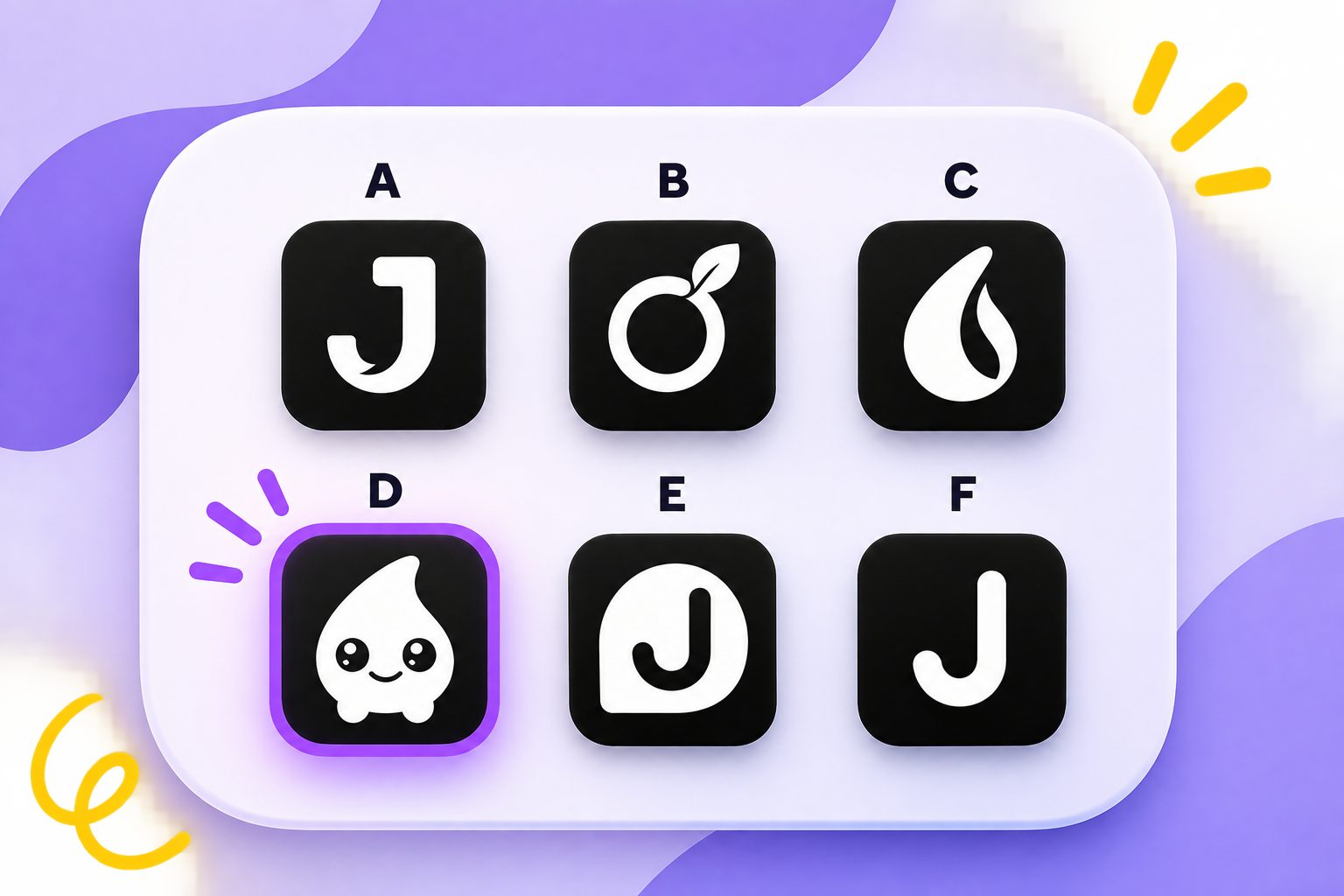
    6 application icon options. The kids chose option D.

    How choosing a tiny app icon turned into a surprisingly long debate — and why asking teenagers turned out to be a very good idea.

    Read more

    Six Icons, One Winner, and a €5 Bet

    How choosing a tiny app icon turned into a surprisingly long debate — and why asking teenagers turned out to be a very good idea.

    You wouldn’t think choosing an app icon would be particularly difficult.

    It’s a little picture. It lives on your phone. People tap it. How complicated can it be?

    Quite complicated, apparently.

    Too many cooks, too many icons

    When we started designing Jybbo’s app icon, everyone had an opinion.

    Some wanted something clean and professional. Others preferred something playful. Some liked a recognisable letter J. Others argued for something more abstract, symbolic or characterful.

    And every time we thought we were getting somewhere, someone would produce an entirely new design.

    Sometimes it was better. Sometimes it was worse. Sometimes it was exactly the same design in a different colour, which somehow made everyone reconsider their previous convictions.

    We also discovered that there’s a considerable difference between a logo that looks fantastic on a large computer screen and one that works as a tiny icon surrounded by 47 other apps on a teenager’s phone.

    Intricate details? Beautiful at 500 pixels. Completely invisible at 50.

    We discussed. We compared. We refined. We made more versions.

    We were getting very good at having opinions about app icons.

    We were getting considerably less good at choosing one.

    Enter the actual users

    Eventually, we decided to try something radical: ask the teenagers who would actually be using Jybbo.

    We narrowed the contenders down to six designs, labelled A through F, and stripped them back to black and white so the colours wouldn’t influence the result.

    Our therapists at the clinic then asked young people which icon appealed to them most and which they thought would be easiest to recognise and find on their phones.

    Simple. Sensible. Possibly something we should have done several meetings earlier.

    The €5 bet

    Now, as Jybbo’s Product Owner, I had a personal favourite.

    D.

    The little round character with the big eyes and tiny feet.

    I liked it immediately. It had personality. It was friendly, memorable and unmistakably different from the usual assortment of abstract healthcare logos.

    There was just one problem.

    I was convinced teenagers would find it too childish.

    After all, teenagers tend to have fairly strong opinions about being treated like children, and I imagined our little smiling blob might not survive their scrutiny.

    One of our therapists disagreed.

    In fact, she was so confident that she bet me €5 that the teenagers would choose D.

    I accepted.

    And the winner is…

    D. With 75% of the votes.

    Not a narrow victory. Not a complicated tie requiring another round of discussions.

    Three quarters of the young people who took part chose the little smiling character.

    The therapist won her €5.

    And I was reminded of an important product-development principle: what we think our users will want is not necessarily what they actually want.

    Of course, one small preference survey doesn’t settle every design question. But it gave us a much clearer direction than another afternoon of internal debate would have.

    And perhaps that’s the more interesting lesson.

    We can spend hours discussing whether something feels too childish, too serious, too playful or too unconventional. But when we’re designing for young people, their opinions deserve rather more weight than our assumptions about them.

    So that’s settled. Right?

    We have a winner.

    D is friendly, distinctive and apparently rather more popular with teenagers than I gave it credit for.

    The team can finally move on to other things.

    Except…

    We still need to agree on a colour.

    And as we’ve already established, changing the colour of an icon can make everyone change their mind about the entire design.

    So if anyone needs us, we’ll be looking at approximately 37 subtly different shades of purple.

    Maybe we should ask the teenagers again.

  • Meet the Jybbo Crew: Everyone Has Their Thing

    Meet the Jybbo Crew: Everyone Has Their Thing

    Meet the Jybbo Crew: Everyone Has Their Thing

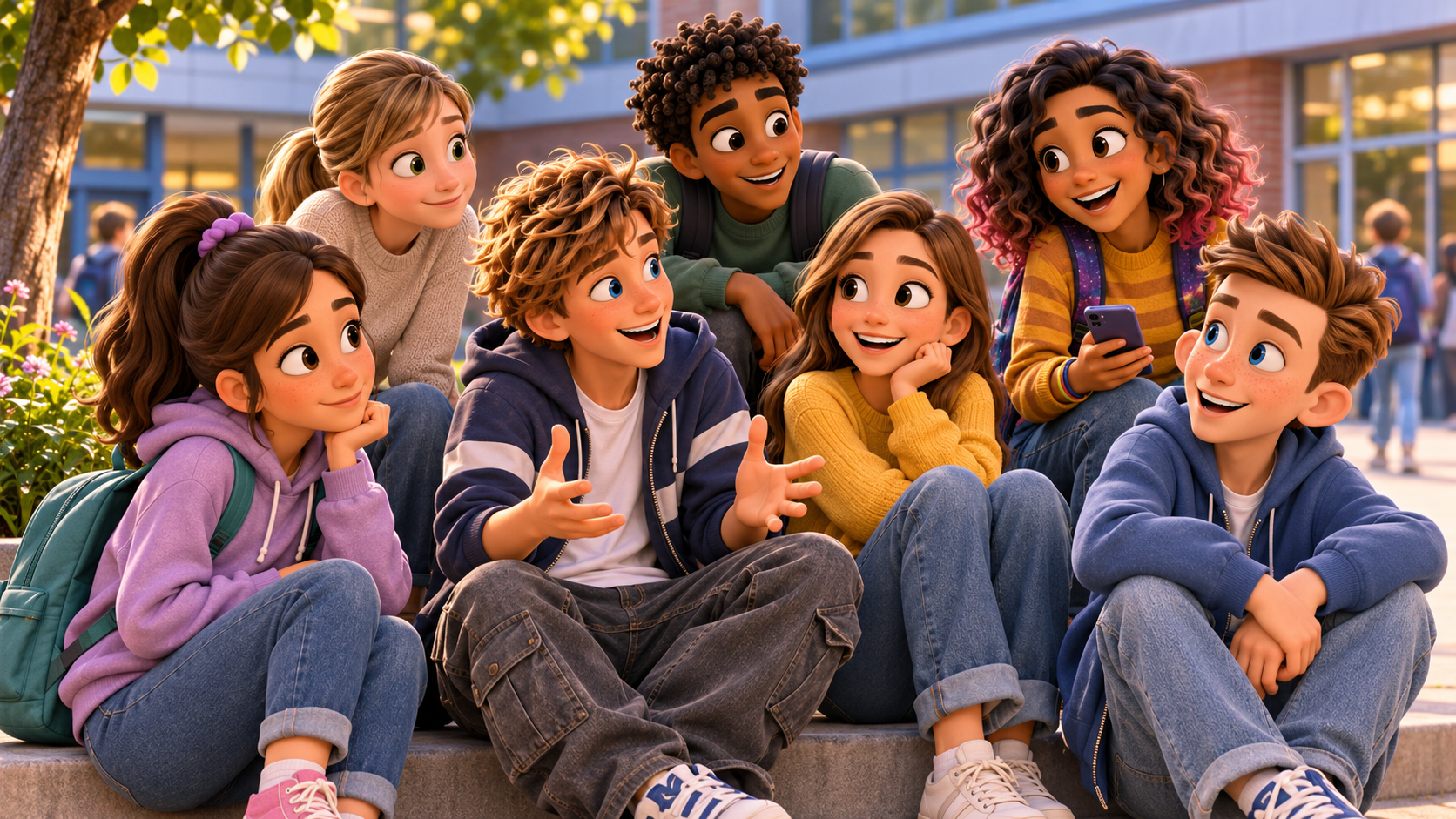
    7 kids of various backgrounds, each with their own challenges.

    Meet the teenagers who bring Jybbo to life. Different personalities, different challenges, and plenty of ordinary teenage moments.

    Read more

    Teenagers first. Everything else second.

    When we started creating Jybbo’s characters, we didn’t want a collection of symptoms dressed up as teenagers.

    We wanted teenagers.

    Young people with interests, friendships, quirks, ambitions, a sense of humour, and sometimes questionable decisions. They have good days, bad days, and plenty of days that are somewhere in between.

    Their challenges are part of their stories, but they’re never the whole story.

    A shy teenager can be hilarious around close friends. Someone who struggles with confidence might be brilliant at something they love. A young person having a difficult time can still laugh at a silly joke, enjoy a favourite song, or look forward to the weekend.

    And sometimes they don’t feel like doing any of those things. That’s part of life, too.

    There’s no single way to be a teenager

    It’s easy to feel like everyone else has things figured out, especially when you’re young.

    But people experience the world differently. Some find social situations exhausting. Others have trouble managing strong emotions, dealing with uncertainty, or asking for help.

    These experiences don’t automatically mean someone has a mental-health condition. Nor does someone need a diagnosis for their difficulties to be real or worthy of support.

    We wanted Jybbo’s world to reflect that diversity without making a big announcement about it.

    Our characters aren’t introduced as the anxious one, the depressed one, or the difficult one. They have names, personalities and stories. You get to know them as people.

    A world where differences are ordinary

    There’s a reason we made these choices.

    We want young people using Jybbo to encounter characters they can recognise themselves in, without feeling labelled or singled out.

    Sometimes that recognition might come from seeing a character struggle with something familiar. Other times, it might be something completely unrelated: a shared hobby, an awkward moment, or a particularly bad Monday morning.

    The aim isn’t to pretend that mental-health difficulties are trivial, or that a positive attitude makes everything better.

    It’s to show that having challenges and having a life aren’t mutually exclusive.

    You can be working on something difficult and still be yourself. You can need support without being defined by that need. And you can make progress without suddenly becoming a different person.